
Soft skills:
A strategic asset for the leaders of tomorrow
In an economic environment in constant transformation—shaped by geopolitical uncertainty, environmental transitions, and technological disruption—organizations must demonstrate unprecedented agility. This VUCA world (volatile, uncertain, complex, and ambiguous) is redefining the very contours of leadership.
While technical skills remain an essential foundation, behavioral competencies—commonly referred to as soft skills—are now taking center stage in the trajectories of leaders capable of steering change, uniting teams, and making informed decisions in shifting environments.
Which skills for tomorrow’s leaders?
Identifying, assessing, and developing these competencies has become a strategic priority for businesses. This approach requires specific tools and expertise—expertise that recruitment firms such as Linman & Associés have long embedded in their practices. Moving beyond the mere evaluation of technical know-how, this methodology adopts a more holistic perspective: it considers human potential in its ability to interact, adapt, and create value in complex environments.
What, then, are the key competencies for future leaders? And how can they be assessed reliably? This article examines the methods used to evaluate soft skills and their decisive role in organizational success.

This figure comes from a study conducted by Harvard University, highlighting the critical importance of soft skills in career achievement.
A Gallup study found that organizations led by emotionally intelligent leaders benefit from significantly higher employee productivity.
According to the World Economic Forum, this projection underscores the growing need for distinctly human skills—such as empathy and critical thinking—to complement technical capabilities and adapt to automation-driven change.
Soft skills: an asset in an uncertain world
Soft skills refer to interpersonal and emotional abilities that enable individuals to navigate complex work environments effectively. These include communication, empathy, stress management, conflict resolution, and critical thinking. In a context where decision-making is often rapid and uncertain, such competencies are now seen as fundamental to effective leadership.
While the term “soft skills” may seem less tangible than hard skills—which are typically measurable and domain-specific (such as software proficiency or technical expertise)—research from Harvard University suggests they are often better predictors of long-term leadership success. According to this study, 85% of professional success is attributed to behavioral skills, compared to only 15% to technical skills.
Why are soft skills essential for leaders?
In a world marked by recurring economic, health, and geopolitical crises, leaders must constantly respond to unforeseen challenges. Research from McKinsey & Company shows that organizations led by individuals who demonstrate adaptability, resilience, and strategic thinking tend to perform better—particularly in terms of overall performance and talent retention.
Soft skills play a central role across multiple dimensions of leadership:
- Adaptability and change management: Leaders must guide evolving teams in unstable environments. Empathy and effective communication help them understand employee needs and facilitate acceptance of change.
- Decision-making under pressure: The ability to make swift, sound decisions in uncertain conditions relies heavily on stress management, critical analysis, and rapid information processing.
- Inspiration and team cohesion: Today’s leaders must inspire and motivate their teams. This requires active listening, empathy, and an understanding of group dynamics.
- Conflict resolution: In increasingly diverse and interconnected workplaces, managing conflict constructively is essential to maintaining trust and collaboration.
Hard skills vs soft skills: what balance for tomorrow’s leaders?
Hard skills remain indispensable—particularly in technical or specialized fields. A Chief Financial Officer, for instance, must have strong expertise in accounting and risk management. However, the balance between hard and soft skills is becoming increasingly critical.
The World Economic Forum (WEF) identified the most sought-after skills for 2025, placing soft skills such as critical thinking, creativity, and people management at the forefront. Meanwhile, technical skills like programming and data management—though still important—rank slightly lower.
This trend clearly indicates that future leaders will need to master both technical and behavioral competencies. For HR professionals, this means evaluating both dimensions throughout recruitment and talent development processes.
The most effective assessment methods
Assessing soft skills may be less straightforward than evaluating technical expertise, but it is no less essential. At Linman & Associés, we integrate proven methods to identify and enhance candidates’ behavioral competencies.
Coaching and continuous development: Soft skills are largely developed through experience and learning. Individual coaching, emotional intelligence training, and collaborative workshops are key tools used to strengthen leadership capabilities.
Structured interviews and behavioral analysis: Linman & Associés conducts rigorous, structured interviews using situational and behavioral questions. These allow candidates to demonstrate how they have handled real-life challenges—highlighting competencies such as stress management, conflict resolution, and decision-making.
Psychometric and personality assessments : Tools such as AssessFirst, Gallup StrengthsFinder, and DISC personality assessments help identify key behavioral traits and predict how individuals are likely to respond in professional settings. These assessments complement interviews and enable a more nuanced, personalized evaluation.
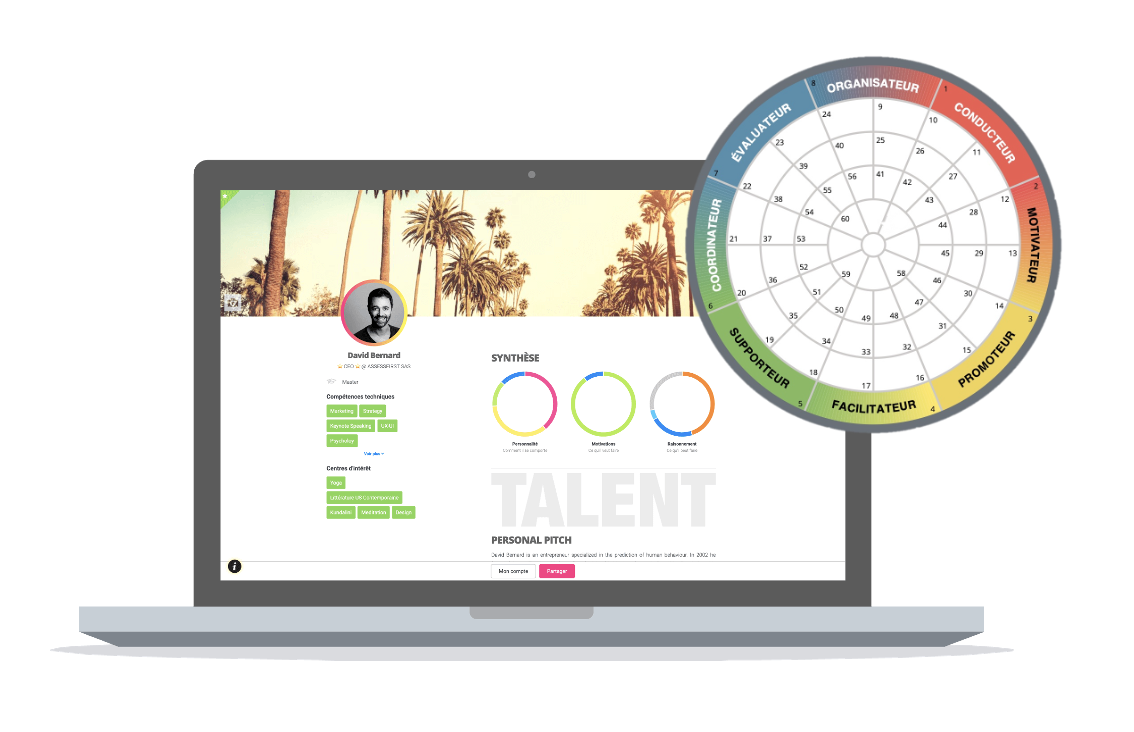
Reference checks: Feedback from colleagues, managers, and peers provides valuable insight into a leader’s interpersonal skills. Linman & Associés systematically conducts reference checks for top management roles to better assess qualities such as empathy, listening skills, and relationship management.
Tomorrow’s leadership relies on the balance between hard and soft skills
As businesses navigate an increasingly uncertain landscape, leaders’ ability to combine technical expertise with strong behavioral competencies will be decisive. Soft skills are becoming a critical lever for future leadership, and HR professionals must be equipped to assess, develop, and integrate them into recruitment and talent strategies.
In this evolving context, agility, resilience, and the ability to inspire will be among the most sought-after qualities. Organizations that cultivate and value these competencies will gain a significant competitive advantage in the years to come.
To go further in your
next recruitments